Download the Conference Proceedings
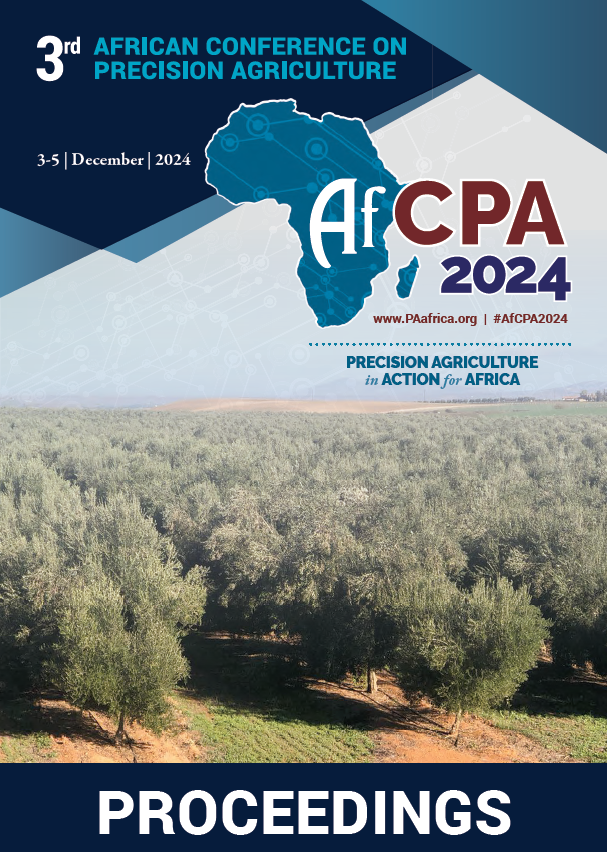
Proceedings
Authors
| Filter results7 paper(s) found. |
|---|
1. Biochar and/or Compost for Soil Quality and Maize Yield Improvement in an Acidic Ferralsol Soil in Kenya.The rapidly increasing global population, climate change and dwindling resources have made it very difficult to meet global food demand. To address the issue of food insecurity, sustainable intensification of agriculture (SIA) has been proposed. However, the consequences of poorly managed agricultural intensification can negatively affect the ecosystem. Biochar and compost application has been widely recommended as a highly promising soil fertility replenishment option to promote sustainable agriculture.... |
2. Estimating soil organic carbon from cell phone imagesSoil organic matter (SOM) is considered as the backbone of soil health and soil quality. Thus, its’ estimation is critical to support the development of management decision including precision agriculture. To overcome challenges of laborious, rather expensive and time-consuming laboratory measurements, recent advances in image acquisition systems provided a new dimension of image-based SOM prediction. However, challenges remain in using soil images taken directly in the field due to variable... A. Biswas, Y. Fu, P. Taneja, S. Lin, P. Daggupati, H. Vasava |
3. Development of Canopy Mapping System of Asian pears (Pyrus pyrifolia Naka) Using Terrestrial Laser ScanningIn this paper, the canopy mapping system (CMS) of Asian pears for estimating yield during Bud thinning and Pruning operations using point cloud data was proposed. Bud thinning and Pruning in Asian pear (Pyrus pyrifolia Naka) is necessary to ensure quality and yield but is time-consuming and heavily depends on work knowledge. This study described a method of estimating the number of fruits through the length of a branch based on remote sensing. The CMS would be useful to support more efficient... E. Morimoto, J. Lee, K. Nonami, I. Matumura, M. Ikebe, S. Sato |
4. Soil Moisture Sensing for Increased Water Use Efficiency and Crop Yields in Furrow Irrigated Systems: a Case of Mubuku Irrigation Scheme in UgandaWater and nutrient use efficiencies remain low in most of the irrigated systems in developing countries, undermining crop productivity in these areas. This is partly due to lack of precise and site-specific information to guide irrigation scheduling. In most cases information on soil properties and crop water requirements is lacking and thus irrigation scheduling is done on rotational basis whether the crop needs water or not. Consequently, the amount of water stored in soil root zone for crop... E. Opolot, D. Besigye, P. Musinguzi, I.N. Alou, T.A. Basamba, G. Olupot |
5. Comparative Assesement of Interpolation Techniques in Predicting Soil Properties on a Sloping Pasture Land Under Fallow in a Ferralsol in UgandaSoil variability is a major challenge in application of mineral fertilizers in Sub-Saharan Africa (SSA). Use of soil fertility maps can effectively guide the use of mineral or organic fertilizers or fertilizers. Interpolation techniques are widely used in the formulation of these fertility maps. The precision of spatial interpolation techniques for predicting unmeasured values have been reported by various researchers but there are cconflicting findings regarding the relative performance of these... J.M. Menya, P. Musinguzi, J.M. Mwanjalolo |
6. A Synopsis of Water and Nutrient Requirements of Hass Avocado for Uganda and Sub-saharan Africa PractitionersHass avocado production is increasing in Uganda and sub-Saharan Africa (SSA) to tap into the lucrative market especially in Western Europe, China, Japan, and Russia. However, there is limited information about its water and nutrient requirements in end-user-friendly formats especially in Uganda and SSA. We consolidated the scanty information about water and nutrient requirements of Hass avocado and made necessary recalculations and unit conversions to aid meaningful uptake of the information by... P.C. Odong, G. Olupot, T.L. Odong, A. Mwije, P. Musinguzi, I.N. Alou, T.A. Basamba, P. Ebanyat, E. Opolot |
7. Predicting the Distribution of Groundnut Phytopathogens Under Current and Future Climatic Scenarios in ZimbabweGroundnut (Arachis hypogaea L.) is an important oil crop with immense nutritional and economic benefits, but its productivity in sub-Saharan Africa (SSA) is threatened by a plethora of phytopathogens such as groundnut rosette virus, Alternaria leafspots, early leafspots and peanut rust. In Zimbabwe, ecological niches and epidemiology of these pathogenic microbial strains, particularly under the current and predicted climate change scenarios, are still poorly understood. Yet, this information... H. Chinwa, C.N. Kamutando |
