Download the Conference Proceedings

 
Get your copy of the 2024 African Conference on Precision Agriculture Proceedings today! Download the PDF file and view all of the available proceedings.
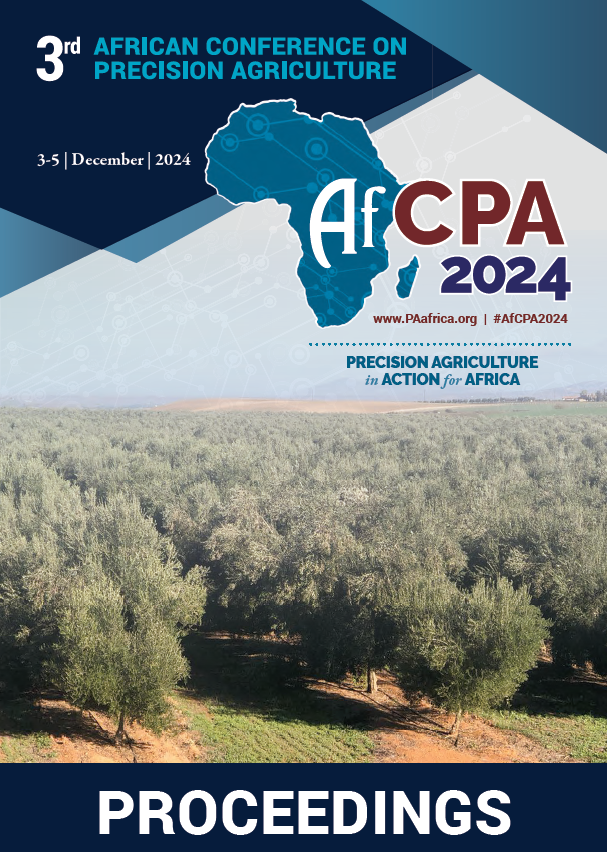
AfPCA Proceedings 2024

Proceedings

Find matching any: Reset
Climate Smart Agriculture
Precision Nutrient Management
Robotics, Automation, and Small Farm Mechanization
Precision Agriculture for Small Holders
Adoption of Precision Agriculture
Keynote
Plenary Session
Precision Nutrient Management
Satellite Imagery
Precision Planting/Harvesting
Add filter to result:
Authors
ABLEDE, K.A
ABLEDE, K.A
AFAWOUBO, K
AFAWOUBO, K
ANI, S
ANI, S.E
ANOUMOU, D
ANOUMOU, D.A
ASSIH-FARAM, E
ASSIH-FARAM, E
Abban-Baidoo, E
Abdellah, E
Abdellah, E
Abdellatif, M.A
Aberkani, K
Aboelkhier, H
Abuli, J
Achigan-Dako, E.G
Adeboye, M.K
Adekoya, F
Adolwa, I
Adolwa, I
Aduramigba-Modupe, V
Ajeigbe, H.A
Akinpelu, B
Akinseye, F.M
Ali, A
Ali, A.M
Alshihabi, O
Amao, P
Amapu, I
Amujoyegbe, B.J
Angar, H
Aphing, N
Azonhoumon, L.W
BROU, C
Badamasi, M.M
Bakirdjian, E
Belal, A.B
Ben Hamouda, W
Berhe, G
Blair, R
Bonnardel, B
Bouabid, R
Boughattas, N
Boulal, H
Bouraqqadi, A
Bunquin, M
Buttafuoco, G
Bwire, P
Charvat, K
Chehbouni, A
Chehbouni, A
Chivenge, P
Crouch, J
Cursoli, G
Dhiba, D
Dhiba, D
Di Gennaro, S
Diro, S
Dobermann, A
Dossa, B.M
Egeru, A
El Arbi, H
El-Metwally, E
El-Metwally, E.A
Emam, M.S
Engoke, C
Ezui, K.S
Ezzahar, J
FASSINOU HOTEGNI, V
Fletcher, D
Frimpong, K.A
Frimpong-Manso, J
Frimpong-Manso, J
Fulton, J
GANYO, K.K
Ganyo, K.K
Gatto, S
Gitau, M
HARKANI, A
HOUMAIRI, H
Hafedh, H
Harigaya, T
Hendway, E.A
Hmimou, M
Hmimou, M
IBN EL MOKHTAR, F
IDRISSI, O
Imen, H
JAT, M
Jalhoum, M.E
KOTAIX, A
KOTCHADJO, K
KOUDJEGA, K
KOUDJEGA, K
KPEMOUA, K
KPEMOUA, K.E
KRIMIBENCHEQROUN, S
Kamau, J.W
Karanja, M.M
Karim, A
Kayad, A
Khabba, S
Khechba, K
Khosla, R
Kihara, J
Kitonyo, O
Kobusinge, A
Kubickova, H
LACHGAR, A
LOMBO, Y
LOMBO, Y
Laamrani, A
Laamrani, A
Lacoste, M
Landolsi, M
Larbi, A
Lawal, B
Longchamps, L
MECHRI, M
MECHRI, M
MENSAH, A
MENSAH, A.T
MUGI, E
Macharia, A.N
Majaliwa, M.J
Majumdar, K
Marinello, F
Marschner, B
Marwa, K
Matese, A
Misbah, K
Mohamed, E.S
Mohamed, Z
Mohammed, I.B
Molin, J
Mpinganjira, O
Musinguzi, P
Mutegi, J
Mutua, J
Nasrallah, A
Nigussie, A
Njoroge, S
Njoroge, S
Nouiri, I
Nyikal, R.A
Oke, A.O
Ortiz, B
Osia, M
Oyedele, D
Parigiani, J
Peets, S
Persson, K
Peña, J
Phillips, S
Piikki, K
Pirotti, F
Rhodes, C
Rodrigues, F
Roudies, N
SEHBAOUI, F
SOGBEDJI, J.M
Safar, V
Said, M
Saito, K
Samri, S
Sartori, L
Sawsen, A
Sayed, R
Sayed, R.K
Sbai, I
Scott, B
Sehbaoui, F
Sehbaoui, F
Senkoro, C.J
Serraj, R
Shaddad, S
Sharma, S
Shepherd, K
Shisanya, C.A
Singh, V
Sitienei, R
Soaud, A
Soaud, A.A
Soumaya, A
Sozzi, M
Söderström, M
Söderström, M
TCHALLA-KPONDI, M
TCHALLA-KPONDJI, M
Terhoeven-Urselmans, T
Toscano, P
Tsado, P.A
Tukur, A
Vergutz, L
Walsh, M
Wetterlind, J
Woods, S
Yamungu, A.B
Youssef, T
Zahran, M
Zewdie Gebrekidan, B
Zhu, J
Zingore, S
de Castro, A
Topics
Adoption of Precision Agriculture
Precision Agriculture for Small Holders
Precision Nutrient Management
Satellite Imagery
Keynote
Plenary Session
Precision Nutrient Management
Climate Smart Agriculture
Precision Planting/Harvesting
Type
Oral
Poster
Year
2024
2020
2022
Home » Topics » Results

Topics

Filter results77 paper(s) found.

1. Biochar and/or Compost for Soil Quality and Maize Yield Improvement in an Acidic Ferralsol Soil in Kenya.

The rapidly increasing global population, climate change and dwindling resources have made it very difficult to meet global food demand. To address the issue of food insecurity, sustainable intensification of agriculture (SIA) has been proposed. However, the consequences of poorly managed agricultural intensification can negatively affect the ecosystem. Biochar and compost application has been widely recommended as a highly promising soil fertility replenishment option to promote sustainable ...

2. Mapping spatial variability of soil nutrient deficiencies in smallholder villages – a prerequisite for improved crop production in Africa

Smallholder farming is the dominating type of agricultural production in many parts of Africa. If cultivation practices can be adapted to match the specific needs of individual smallholder plots, this can certainly be regarded as a form of precision agriculture (PA), considering their limited size. A fundamental prerequisite for successful application of PA is the availability of basic information on soil properties at a detailed enough level. To fill yield gaps, site specific information mus... M. Söderström, K. Piikki, J. Kihara, J. Mutua, J. Wetterlind

3. Implementation of Proximal Soil Sensing, Data Fusion and Machine Learning to Improve Phosphorus Management at a Field Scale

In the context of a rapid increase in phosphorus (P) fertilizers prices, new techniques are needed for geospatial predictions of soil P for improved P fertilizer management, while increasing farmer profitability and reducing environmental concerns. One of the biggest issues in site-specific phosphorus management is the substantial spatial variability in plant available P across fields. This leads to an expensive and laborious process for accurate mapping soil P using a traditional soil sampli... A. Lachgar

4. Assessment of Performance of APSIM Model with Experimental Data from the Short-term Biochar Experiment at Guinea Savanna Zone (Nyankpala), Ghana

A three-year season, short-term study (2017–2019) was conducted at farming for the future UDS-Nyankpala, near Tamale in the Guinea Savannah Zone of Ghana. It was done to assess the effect of five different sources of biochar applications on rice-cowpea intercrop system on soil nutrient status and upland rice productivity. The experimental treatments comprised a control, 5 t/ha rates of high and low pyrolysis (400-7000C) of biochar. Five different sources of biochar (groundnut...

5. Simulate Plant Growth Response to Biochar applications on upland rice-cowpea intercrop and Inorganic N and P on a Ferric luvisols Soil in Ghana

Five different sources of biochar (groundnut shells, rice husk, poultry manure, sawdust, and corn cobs) at a rate of 5t/ha were incorporated into the soil at a depth of 30 cm during field experiments in Nyankpala in Ghana. A split plot factorial design arranged in a randomized complete block with 4 replications was used. The uniqueness of the studies was that cowpea and inorganic fertilizer treatments were added to aid upland rice-cowpea N and P content of the biochar. These studies provide a...

6. Precision Farming Using Spatial Soil Variability Maps for Improved Banana Nutrient Management in Uganda

Banana is one of the most important crops for millions of farmers in Uganda. However, its production has remained low due to limited understanding of the variability of soils for targeted nutrient management. Measures that improve the understanding of soils are instrumental to guide precision nutrient management in highly heterogeneous cropping systems. A study was conducted on a Ferralsol in central parts of Uganda to assess the spatial variability of Soil Organic Carbon (SOC), Total nitroge... P. Musinguzi

7. GESTION STRATEGIQUE DES NUTRIMENTS POUR L’AMELIORATION DU RENDEMENT ET DE LA PROFITABILITE ECONOMIQUE DU GOMBO (Abelmoschus esculentus L.) SUR LES SOLS FERRALITIQUES AU SUD TOGO

Des stratégies efficientes de gestion des nutriments sont indispensables pour une production agricole améliorée et durable. La performance du gombo (Abelmoschus esculentus L.) a été évaluée sous cinq approches de fertilisation dans un cycle de deux cultures successives à la Station d’expérimentations agronomiques de l’Ecole Supérieure d’Agronomie de l’Université de Lomé (SEA/ES... K. Kotchadjo, J.M. Sogbedji

8. Precision Nutrient Management for Cassava Production

Matching nutrient supplies with plant nutrient requirements is key to sustaining crop production while preserving the environment. However, fertilizer recommendations are either inexistent or provided as blanket rates in cassava production systems in sub-Saharan Africa. We studied the effects on cassava yield and profitability of site-specific fertilizer rates against farmer’s practices within the framework of the African Cassava Agronomy Initiative (ACAI) project in Nigeria and Tanzani... K.S. Ezui

9. MAPPING AND ASSESSING AFRICAN SOILS FERTILITY USING HIGH-RESOLUTION REMOTE SENSING AND MACHINE LEARNING APPROACHES: STATE-OF-THE-ART AND PERSPECTIVES

Africa is far from exploiting its true agricultural potential. United Nations Food and Agriculture Organization (FAO) indicates that the continent has 60% of non-cultivated lands worldwide. While soil fertility is well highlighted as one of the major limiting factors, only limited information is available on soil nutrient contents and nutrient availability in the African soils. Soil fertility of agricultural fields is related to many physical and chemical properties, such as texture, organic ... M. Hmimou, A. Laamrani, F. Sehbaoui, A. Chehbouni, S. Khabba, D. Dhiba

10. Methodology for Assessing Nutrient Status of Nigeria Croplands: AfSIS/NiSIS Pilot Project - Pathway for Precision Agriculture Mapping

Inherently low soil fertility, nutrient imbalances and accelerating degradation constitute threats to precision agriculture (PA), agricultural productivity and ecosystem services in sub-Saharan Africa (Nigeria inclusive). Presently, the geographical extent of existing nutrient constraints, location specific trends and opportunities for managing these over time are highly uncertain. The AfSIS/NiSIS project assessment aims to provide spatially explicit observations, measurements and predictions... V. Aduramigba-modupe, I. Amapu, M. Walsh, B. Scott

11. Soil fertility mapping of Dry savannah zone of Togo

Increasing agricultural productivity and therefore the production requires a good knowledge of the soil fertility status and a sustainable nutrients management. The objective of this study is to map spatial distribution of some selected soil fertility parameters in the dry savannah agro-ecological zone that covers the regions of Savanes and Kara in Togo. Soil fertility parameters such as pH, available phosphorus (P), exchangeable potassium (K) and organic matter were determined in soil sample... K.K. Ganyo, K.A. Ablede , K. Koudjega, S. Ani, K. Afawoubo, D.A. Anoumou, A.T. Mensah, E. Assih-faram, M. Tchalla-kpondji, K. Kpemoua, Y. Lombo

12. Nutrient management tailored to smallholder agriculture enhances productivity and sustainability

Plant nutrition plays a central role in the global challenge to produce sufficient and nutritious food, lessen rural poverty, and reduce the environmental footprint of crop production. Efficient fertilizer use requires tailored solutions that are scientifically sound, practical and scalable especially for smallholder farmers, such as the crop-led site-specific nutrient management (SSNM) approach developed in the 1990s for cereal production systems in Asia to address variability among farms. O... P. Chivenge, K. Saito, M. Bunquin, S. Sharma, A. Dobermann

13. Determining Nutrients rates for Maize, Rice, Cotton, and Tomato in Dry Savannah zone of Togo based on site specific nutrient management approach

Inadequate fertilizer application limits crop yields and lead to the soil fertility depletion. This study aims at formulating nutrients rates recommendations for main the crops in dry savannah zone of Togo. Site specific nutrient management approach based on spatial variations in nutrients status, crops nutrients requirement and average crop yields under field conditions was used to determine recommendations rates in N, P and K. For maize cropping, nutrients needs are 94 kgN.ha-1, ...

14. IMPACT OF SENSOR-BASED PRECISION NITROGEN MANAGEMENT ON WHEAT YIELD AND NITROGEN USE EFFICIENCY

Optical sensors are promising new technology for precision nitrogen management in crops. Fertilizer N management for wheat (Cultivar: Giza 171) using optical sensor (GreenSeeker®) was evaluated at the Experimental Farm of Faculty of Agriculture, Cairo University, Giza Governorate, Egypt. The experiment was laid out in randomized block design with three replications during two successive winter seasons (2017/2018 and 2018/2019) to quantify the relationship between N uptake at jointing grow... A.A. Soaud, E.A. El-metwally , A.M. Ali, R.K. Sayed

15. A geostatistical approach to define a soil fertility index based on the main soil macronutrients

Soil fertility is greatly affected by main soil macronutrients such as nitrogen (N), phosphorus (P), and potassium (K). These macronutrients can be used to define a synthetic fertility index to support soil fertilization. The study was aimed to propose a geostatistical approach to define a synthetic fertility index based on factorial cokriging. It consists in quantifying and reducing the spatial variability of multivariate data to only a few factors, related to different spatial scales. Such ... H. Aboelkhier, A. Nasrallah, S. Shaddad, G. Buttafuoco

16. QUANTIFICATION OF OPTIMAL FERTILIZERS DEMAND IN WHEAT AND CORN FIELDS IN MOROCCO USING VERY HIGH-RESOLUTION REMOTE SENSED IMAGERY AND HYBRID COMPUTATIONAL APPROACHES

Abstract. Demand on agricultural products is increasing as population continues to grow. Data driven management of macronutrients (i.e., nitrogen (N), phosphorus (P) and potassium (K)) and crops are of critical prominence to get the most out of soil in terms of crop yield while preserving environment. This study aims to establish a quantitative framework for macronutrient (i.e., nitrogen, phosphorus, and potassium) status (i.e., excess, deficiency) for winter wheat (Triticum ... K. Misbah, A. Laamrani, A. Chehbouni , D. Dhiba , J. Ezzahar, K. Khechba

17. Nutrient Quality Studies of Fluted Pumpkin (Telfairia Occidentalis Hook. F) Leaves as Influence by Fertilizer Micro-dosing and Time

The nutrient qualities of vegetables have been noted to be affected by agronomic practices. The study evaluated the effect of fertilizer micro-dosing and time of application on nutrient quality of fluted pumpkin. The field experiment was carried out during 2017/2018 cropping season at the Teaching and Research Farm, Obafemi Awolowo University (O.A.U), Ile-Ife, situated within the forest zone (latitude 070 28’N and longitude 040 33’East and 224 m above sea level). The experiment wa...

18. Analysis, design and development of a web and mobile application for fertilizer olive orchards recommendations

Farmer’s fertilization practices (FFP) in olive intensive or super intensive orchards must be improved to a better control of fertilization costs, to increase olive yielding, to maintain soil fertility and to avoid environment pollution. Indeed, a large category of fertilizer users apply fertilizers arbitrary (66%) without any knowledge about the adequate nutrient requirements of a such planting system. To improve the FFP in intensive and super intensive olive orchards, and in the frame... A. Larbi, H. Boulal, H. El arbi, W. Ben hamouda

19. Enhancing the Use of Appropriate Fertilizers for Improving Rice and Maize Production in Tanzania

Most soils under maize and rice production in Tanzania are characterized by low soil fertility. Fertilizer recommendations were developed in Tanzania to improve soil productivity but most of them are for N and P nutrients. The recommendations do not cover secondary and micro nutrients because the data for these nutrients are very few to establish response functions. In year 2017 to 2019, trials were conducted in 769 farmers’ field in Tanzania to determine soil fertility status and the r... C.J. Senkoro

20. Precision Nitrogen Management in Maize Using an Optical Sensor in the Indo-Gangetic Plains

Blanket fertilizer nitrogen (N) for large irrigated maize field lead to low N use efficiency (NUE) due to spatial and in season temporal variability. In order to achieve higher NUE, a fertilizer N management strategy using GreenSeekerTMoptical sensor was evaluated.  GreenSeekerTM uses visible and near-infrared spectral response from crop canopies. We conducted 03 field experiments during 2012-14 in monsoon season maize to define relationship and develop algorithm between in sea... V. Singh

21. Spatial variability of soil and tree nutrient status in relation to bitter pit incidence in apple orchards in the Sais plateau, Morocco

Discreet spatial variability of soil fertility affects crop productivity and quality. In general, nutrient deficiencies are the most incriminated. However, excess or unbalanced nutrient can also impact seriously both yield and quality, especially in fruit tree crops. Bitter-pit, a nutrient disorder related to K-Ca-Mg unbalance in apple orchards can cause major loss of apple quality in field, as well as on post-harvest following periods of cold storage. Conventional composite sampling for soil... R. Bouabid

22. Soil fertility characterization and mapping for Adigudem plain, Northern Ethiopia

As Ethiopia’s agriculture has been influenced by variability and poor soil fertility management and information, thus this study was aimed to determine the physico-chemical properties of soils and build geo-referenced soil information systems so as to have precision agriculture for adigudem plain. An area of 229 km2 comprising different villages was delineated for the study. Soil sampling points were arranged in a grid form and georeferenced using a hand-held GPS. A total of 194 Soil sa... G. Berhe

23. Les engrais minéraux issus du diagnostic sol améliorent la fertilité chimique et la production cacaoyère à l’Est, au Centre-Sud et au Sud-Ouest de la Côte d’Ivoire

Une étude sur la fertilisation minérale raisonnée a été faite sur trois ans, à l’Est (Indénié-Djuablin), au Centre-Sud (Lôh-Djiboua) et au Sud-Ouest (Nawa) de la Côte d’Ivoire afin, d’évaluer les effets de 6 formules d’engrais minéraux sur la fertilité du sol et la production cacaoyère. Ainsi, sur chaque site, le dispositif expérimental a été en bloc de ... A. Kotaix

24. SIMULATION OF CASSAVA YIELD UNDER DIFFERENT CLIMATIC SCENARIOS IN KILEMBWE, SOUTH-KIVU PROVINCE EASTERN DR CONGO

Climate variability and change are projected to significantly impact agricultural production across Africa. This study assessed the effects of climate variability and change on cassava yield in Kilembwe, South-Kivu province Eastern DR Congo. The assessment relies on the DSSAT crop model simulation of cassava under current and future climate. The period 1980–2010 was used to represent the baseline, while future projection covers three periods including the near future (2010–2039), ... A.B. Yamungu, A. Egeru, M.J. Majaliwa, B.M. Dossa

25. The roles of key public services on the adoption of climate-smart agricultural technologies in coffee-based farming system of Ethiopia

Many studies focused on the adoption studies of relatively expensive technologies such as improved varieties, inorganic fertilizers, and agricultural machines. However, limited empirical studies have been conducted on the adoption of improved agricultural practices such as intercropping, manure application, crop rotation with leguminous crops and forages, conservation tillage, and soil and water management practices which are tremendously important for climate change adaptation and mitigation... S. Diro

26. Changes in climatic factors lead to the change in cultural wedging of rice in the Ivorian pre-forest zone

Climate change in the pre-forest zone of Cote d'Ivoire has led to a mismatch between cropping periods and new seasons, challenging the sowing periods usually recommended for rainfed rice cultivation in this area. Our study aims to determine the optimal sowing period for two rainfed rice varieties cultivated in this pre-forest zone of the country. The agroclimatic analysis carried out over the period 1980-2017 allowed to determine the optimal dates for sowing ri... C. Brou

27. The Vision of Future Earth Observation for Agriculture

The main objective of EO4AGRI is to catalyze the evolution of the European capacity for improving operational agriculture monitoring from local to global levels based on information derived from Copernicus satellite observation data and through exploitation of associated geospatial and socio-economic information services. EO4AGRI assists the implementation of the EU Common Agricultural Policy (CAP) with special attention to the CAP2020 reform, to requirements of Paying Agencies, and... K. Charvat, V. Safar, H. Kubickova

28. Orchard Yield Assessment in North-East of Morocco using Satellite Imagery

Agricultural sector represents one of the pillars of the Moroccan economy. The Green Morocco Plan (GMP) established in 2008 present the main engine of development of this sector and for local economy. One of the objectives of Pillar I and Pillar II of GMP was to maximize production with less use of water resources. As an effect of climate change, Morocco is experiencing a strong variability in spatial and temporal variability of precipitation with a detrimental effect on yield and quality of ... K. Aberkani, A. Matese, S. Samri, M. Said, S. Di gennaro, P. Toscano

29. Monitoring Corn (Zea mays) Yield using Sentinel-2 and Machine Learning for Precision Agriculture Applications

Currently, there is a growing demand to apply precision agriculture (PA) management practices at agricultural fields expecting more efficient and more profitable management. One of PA principal components for site-specific management is crop yield monitoring which varies temporally between seasons and spatially within-field. In this study, we investigated the possibility of monitoring within-field variability of corn grain yield in a 22ha field located in Ferarra, North Italy. Archived yield ... A. Kayad, M. Sozzi, F. Pirotti, F. Marinello, L. Sartori, S. Gatto

30. Predicting in-Season Sorghum yield potential using Remote Sensing Approach: a case study of Kano in Sudan Savannah agro- ecological zone, Nigeria

The preliminary estimation of expected yields and the accuracy of this evaluation provide information for decision-making related to the harvest. Estimating crop yield using remote sensing techniques has proven to be successful, having the ability to provide yield estimates prior to harvest. This study was conducted to examine the applicability of Sentinel-2B for estimating sorghum yield during the 2018 rainy season in Bebeji, Dawakin-Kudu and Rano Local Government Areas Kano State, in the Su... A. Tukur, H.A. Ajeigbe, F.M. Akinseye, I.B. Mohammed, M.M. Badamasi

31. Digital platforms for boosting farmer knowledge: Two case studies in Kenya and Uganda

Approximately 80% of all farms in Africa, or 33 million farms, are two hectares or less in size. Many of these smallholder farmers do not have access to resources, including extension services, to improve their farms. Lack of knowledge of Good Agronomic Practices (GAPs) causes farmers to fail to reach their full yield potential. Extension workers responsible to provide these GAPs to farmers are spread thin. For example, as of March of 2019, there was one extension worker for every 1,800 coffe... E. Bakirdjian, T. Harigaya, M. Osia, J. Zhu, J. Abuli

32. Mapping African soils at 30m resolution - iSDAsoil: leveraging spatial agronomy in farm-level advisory for smallholders

Field level soil data has been the foundation of agronomic advisory, but traditional methods involving on-farm sampling are too expensive for a large proportion of African smallholders. Building on the work of the African Soil Information Service (AfSIS), Innovative Solutions for Decision Agriculture (iSDA) and partners have created an agronomic soil database which covers the entire African continent at a spatial resolution of 30 m. “iSDAsoil” combines remote sensing data and othe... J. Crouch

33. Mechanisation of smallholders in Zambia by agrodealer development

The main challenges hampering agricultural mechanization in sub-Saharan Africa (SSA) are affordability, availability, lack of farmer skills and constraints within the private sector. Smallholders are trapped in a vicious circle of low income, low demand, high cost, and lack of financing. Low capacity and lack of support for mechanisation contractors (agrodealers) to succeed is holding back the development. The objectives of this work were (i) to assess the affordability of mechanisation syste... S. Peets, S. Woods

34. Spatial variability and mapping of selected soil quality indicators for precision farming at a smallholding level in Minna, Nigeria

Smallholding farmers in Nigeria still practice blanket application of fertilizers, without giving consideration to spatial variations in soil properties across their fields. Understanding of spatial variability in soil properties is essential for precision farming, especially in this era of resource scarcity and high cost of fertilizers. This study was carried out to assess and map the spatial variability in selected soil quality indicators in a smallholder farm in Minna, North-central Nigeri... B. Lawal, M.K. Adeboye, P.A. Tsado

35. FARMER CHARLIE: PRECISION AGRICULTURE AT SMALLHOLDER FARMERS’ SERVICE

Preliminary research and an ongoing project in Nigeria showed that agriculture is a crucial activity in the country. It is mainly carried out in small, family-owned farms: in fact, 88% of Nigeria farmers work on less than 0.5 ha. Lack of resources, of readily available information and the impact of climate on agricultural activities lead to low yields and high-cost farm inputs (FAO, 2020). The availability of agricultural data and weather forecast information could play an essential role in i... B. Bonnardel, G. Cursoli

36. Using Site-Specific Management Zones for Potato Crop Management, East Nile Delta, Egypt

The field management zones (MZ) delineated using soil electrical conductivity (EC) and topographic parameters   are the basis for site-specific crop management (SSCM). The objective of this paper was to delineation site-specific management zones of 155 feddans (67.2 ha) of a potato  pivot field at East of Nile Delta, Egypt for use in smart farming based on spatial variability of soil and plant properties, yield  and topographic attributes. The salinity measurement in the f... A.B. Belal, E.S. Mohamed, M.E. Jalhoum, M. zahran, M.A. Abdellatif, M.S. Emam, E.A. Hendway

37. Scaling Precision Agriculture in West Africa Smallholder Irrigation and Water Management Systems

The advent of precision agriculture (PA) is changing global agricultural productivity; through the underlining principles that ensure inputs required for the management of soil, water and crop agronomy are supplied precisely across the field landscape resulting in optimum yield. The benefits of PA include improved food security through increases in water and nutrient use efficiency, and timely management of good agricultural practices. The practice of PA could be beneficial across commercial ... A.O. Oke, V. Aduramigba-modupe

38. Potential precision agriculture practices for higher fruit and vegetable production in West Africa: A Review

During the last decades, efforts have been made to increase the yield and the quality of major fruits and vegetables but still, farmers mainly those in West African countries are struggling to close the yield gap. Precision agriculture has been reported in most developed countries as a set of tools integrating information and technologies for efficient crop production. Over the decades, scholars have been skeptical about the development and implementation of precision agriculture in West Afri... V. Fassinou hotegni, L.W. Azonhoumon, E.G. Achigan-dako

39. Deep Learning is bringing pan-African small holder advisory services based on mid-infrared spectroscopic soil analysis to the next level

The majority of African smallholder farmers do not have access to soil analytical services. The main reasons are relatively high costs of wet chemical services and difficult logistics. As a result they have to rely on blanket fertilizer recommendations. This often causes poor soil management due to very heterogeneous soil conditions. As a result, the return on investment from blanket fertilizer recommendations is low and fertilizer acceptance is not growing among smallholder farmers. Soil spe... T. Terhoeven-urselmans, D. Fletcher, M.M. Karanja, J.W. Kamau

40. Scale Independent Precision Agriculture

The advent of precision agriculture that occurred in the USA about three decades ago involved application of advanced and innovative technologies. Precision agriculture in the US and other advanced countries continued in that direction and today it is more sophisticated and complex than before.  Interestingly, the concept of Precision Agriculture is relatively simple and does not mandate utilization of advanced technologies to practice precision agriculture. For example, it may take a su... R. Khosla

41. The AgroCard-Côte d’Ivoire project

Le secteur agricole fait désormais partie des secteurs d’activités de précision. Face à l’amenuisement des ressources et les besoins sans cesses croissants en produits agricoles, l’agriculture de précision qui était jusque-là réservée aux grandes firmes agro-industrielles, s’impose aujourd’hui aux plus petits producteurs. Cependant, les matériels restent, pour la plupart, conçus pour la ... N. aphing

42. Remote Sensing: from Plot Towards Landscape Scales

The agricultural research sector is working to develop new technologies and decision support tools to sustainably increase food productivity, ensure global food security and decrease poverty. Precision Agriculture (PA) and specially Remote Sensing (RS) technologies have become more affordable in recent years. Cameras have become more compact and lighter, with improved spectral and spatial resolutions. The use of incoming light sensors allows for images to be automatically calibrated to surfac... F. Rodrigues

43. Tropical Precision Agriculture: the Brazilian Experience

Soils with limited natural fertility and high dependence on imported fertilizers, in addition to intense natural spatial variability, are factors that made Precision Agriculture (PA) develop in Brazil. More than 20 years of academic and business experience have been accumulated, with intense consulting services with business models adapted to local conditions, involving small, medium and large rural properties. Innovations and challenges are still needed in the field of soil fertility managem... J. Molin

44. Harnessing Soil Health to Create More Restorative and Resilient Food Systems in the Central Highlands Eco-Region Foodscape

The relationships among soil health and adoption of regenerative practices, crop productivity, human nutrition and farm profitability are intricate and poorly understood, particularly in the Central Highlands of Kenya. There is a need for a deeper understanding of how soil health is affected by the profitability of preferred value chains among smallholders in this ecoregion. The Central Highlands Ecoregion Foodscape, or the CHEF, which is within the Upper Tana River Basin is centered around f... R. Sitienei

45. Overview of Precision Agriculture Education in North America

Dr. Fulton will present about current educational degree programs and courses being taught in North America on precision and digital agriculture. He will also note feedback from industry on precision agriculture educational needs and where universities are heading with their PA programs. ... J. Fulton

46. Global Renewal and Future of On-farm Experimentation

Experimenting on farm with farmers is gaining momentum as a choice instrument to contribute to addressing global challenges. This presentation will show how the complex histories of field experiments and participatory research are leading toward OFE solutions that are both evidence-based and farmer-centric. Varied communities thread these collaborative innovation pathways, among which those of Precision Agriculture occupy a key position for their ability to leverage scientific rigor, agronomy... M. Lacoste

47. The Role of Smart-Advisory Services in Climate-resilient Agriculture

Crop management is strongly influenced by changes in weather and climate, therefore strengthening resilience and environmental sustainability will require robust advisory services that can support farmers’ decisions. Crop production adaptations to weather, climate variability, and change will need combined efforts from farmers, academia, industry, and government to co-develop solutions, train future workforce not only to advise the farming community but also develop solutions and also e... B. Ortiz

48. Precision Agriculture in Africa; the Youth Are Ready

Precision Agriculture holds enormous potential for Africa’s food security and socio-economic development. With the evolvement of the global agricultural systems and the growing emergence of the Fourth Agricultural Revolution (Agric 4.0), Africa is presented with a huge opportunity to leverage precision agriculture to meet its growing population demands in a sustainable environment. Of course, the growth of precision agriculture practices and tools is not without its challenges. However,... F. Adekoya

49. A Multi-scale Evaluation of Precision Weed Control Strategies in Corn Fields with Drone Technology

Corn (Zea mays L.) is a worldwide priority crop, whose potential yields are closely affected by weed competence, especially in the early stages of crop development. A major concern in corn-growing areas is the occurrence of Sorghum halepense L., as this weed shows reduced sensitivity to pre-emergence herbicides and, therefore, it is necessary to use post-emergence treatments that entail an increase in cost. This research studied the impact of applying a precision weed (S... J. Peña, A. De castro

50. Virtual Agronomist - Getting Soil Information and Agronomic Advice into Farmers’ Hands

Precision agronomic advice tailored to individual farm field characteristics and farmer circumstances is currently unavailable to smallholder farmers in Africa. Virtual Agronomist aims to fill this gap by providing scalable agronomic advisory for African agribusinesses working with smallholder farmers. This is a scientifically based mobile phone app that is simple enough to be used with minimal training by field agents. It is designed to help farmers better meet their production and profit ob... K. Shepherd

51. Precision Farming and Automation in Africa: Challenges and Opportunities

Digitalization, artificial intelligence, robotics and automation are currently driving a new revolution towards precision farming (PF) and Agriculture 4.0. This will contribute to enhanced sustainability and agroecological advances through optimal use of soil, water, agricultural inputs, as well as pest and weed control, providing accurate decision support systems to farmers. PF is gradually transforming agricultural landscape by supporting farmers with optimized management of inputs and reso... R. Serraj

52. Driving Up Large Scale Irrigated Wheat Yields Through Variable Rate P & K Fertilizer Recommendations in Zambia

Soil types and how these change across a field/farm are the main drivers of yield. Through the surveying of the fields and their subsequent subdivision (virtual) into homogenous zones, Cropnuts has been able to carry out yearly soil sampling within each zone and generate soil correction plans to target the needs of each individual zone rather than applying blanket recommendations. This has led to improved fertilizer efficiency and has had a massive impact on yields of our clients. ... J. Parigiani

53. Decentralized Research: an Opportunity to Accelerate the Transition Towards Sustainable Food Production

The large majority of farmers experiment on their farms to invent and/or adopt new crop production techniques and technologies. This endogenous experimentation process is slow because it often resembles trial and error and relies on minimal data (e.g., comparing total yield between two fields) to draw conclusions. Digital agronomy can help enhance the scientific value of these experiments and thus enable systematic progress toward working solutions. This presentation will discuss the use... L. Longchamps

54. How 20 Years of Precision Agriculture Experience Can Benefit Small Landholders

Most people think only larger farms can benefit from incorporating precision agriculture technologies, when the bigger impact happens with smaller farms. A ten percent increase in crop yield is much more impactful for small land holders for various reasons based upon 20 years’ experience, research, and personal utilization. Incorporating remote sensing, drones, small autonomous robots, and other technologies and practices can help small holders increase yield, crop quality, and free up ... R. Blair

55. Decision-Making Tools in Soil Management and Plant Nutrition On-Farm Research and Observation Plot: Between Reality and Challenges

In this presentation, we will address a number of decision-making tools and assess their relevance and limitations for the Mediterranean and Tunisia's agricultural conditions. Decision-making tools can be classified, based on the scale, to different levels, ranging from national and regional scale to farm scale. On a large scale, an agricultural policy can be drawn based on the governmental agricultural plans, and soil maps can be adopted as a decision-making tool and thus guide support i... M. Mechri

56. Phosphorus, a Key Nutrient for a Sustainable Agriculture

In the presentation I will discuss about the dichotomy regarding P between the northern (temperate conditions) and southern (tropical conditions) realities. I will bring the case of Brazil and how the correct management of P was important for the development of its agriculture. At the end, I will close talking about how we need to shift our focus towards improving P use efficiency to solve our issues (both where it is lacking and where it is in excess) and the way to achieve it. ... L. Vergutz

57. Precision Agriculture for Sustainable Transformation of Food Systems in Africa

... A. Bouraqqadi

58. 4Rs As an Entry Point for Precision Agriculture in Smallholder Farming Systems of Africa

This presentation will showcase how adoption of the principles of 4R Nutrient Stewardship (Applying nutrients from the Right Source, at the Right Rate, at the Right Time, and in the Right Place) provides a feasible entry point for the integration of Precision Agriculture in Smallholder Farming Systems of Africa. ... S. Njoroge

59. Together, Let's Make Africa the Epicenter of a Sustainable Transformation of Food Systems

... P. Bwire

60. GNSS and SBAS Technologies for Precision Agriculture in Africa

This presentation will highlight the various applications in the Agriculture sectors, their performance requirements, and the relevant Global Navigation Satellite System technologies (GNSS) that can meet these requirements. It will focus specifically on Satellite Based Augmentation System (SBAS) and Europe’s Galileo High Accuracy Service as upcoming systems in Africa that the Agriculture user communities are encouraged to leverage. ... A. Kobusinge

61. Improving Lime and Fertiliser Recommendations for Smallholders Using Co-variate Zoning and Low Cost Mir Soil Testing Technology

Small-holder farmers lack for them affordable access to crop and field specific lime and fertilisation advice. Another challenge is that while crop and region specific fertiliser blends could be produced, high resolution, unbiased and up to date soil information is lacking and thus crop and region specific blends are not produced. As a result, the farmers are left with a small number of available compound and fertiliser blends that often do not match the crop needs. This is not a convincing s... T. Terhoeven-urselmans

62. Presentation from Otini Mpinganjira

... O. Mpinganjira

63. Scalling Ag Technologies to Unlock Value for Agriculture in Africa - Insights from UM6P-al Moutmir Case in Morocco

Completely aligned with the mission of Africa Ag conference to “connect the science and practice needed to put precision agriculture in action for Africa”, UM6P, through its farming development initiative Al Moutmir in Morocco, works hand in hand with all the Ag players  to scale innovative solutions to unlock Africa value through responsible technologies. We believe African agriculture is at a transformational moment in its history  and a time of incredible po... N. Roudies

64. Farmer-led Approaches to Digital Innovation

Digital agricultural innovation has significant potential to transform the ability of smallholder farmers to engage with and benefit fro precision agriculture. Despite this, the benefits of digital agricultural technologies remain largely inaccessible to most of these smallholder farmers. This presentation will share updates and lessons learnt from Producers Direct’s experiences in designing and scaling farmer-led approaches to digital agricultural innovation.  ... C. Rhodes

65. Agricultural Data Market to Empower African Farmers

By transforming the agricultural data into agronomic advices by using AI model, farmer can get a strong tool to help them making the right decision in the right time. Decision about the quantity and the quality of fertilizer to apply, the quantity and the timing of the irrigation,… Also he can get valuable information about yield prediction, phytosanitary risk. All of this information can help famers reducing its operational cost by up to 30%. To develop robust AI model,... F. Sehbaoui

66. IA Algorithm for Plant Counting: Palm Oil Trees Example

Counting and estimating plants can sometimes be a real challenge. In this presentation we will see a concrete example of the application of UAV imagery and AI applied to palm cultivation in order to count the plants on a given area. ... A. Karim

67. Presentation from ML Jat

... M. Jat

68. Post-Harvest Assessments of On-Farm Maize Experimentation

The completion of the most recent maize-growing seasons in northern Cote d’Ivoire and Kenya (western and eastern regions) provided a first opportunity for farmers to share assessments from their participation in a new on-farm research initiative for sub-Saharan Africa called NUTCAT - meaning Nutrient-Catalyzed Agricultural Transformation. ... I. Adolwa

69. Assessment of Nitrogen Fertilization in Tunisian Wheat Production Using Proximal and Remote Sensing

The cereal sector in Tunisia covers wide areas in the country from sub-humid to semi-arid zones; most of the fields are rainfed. The sector is suffering from climate change impacts in term of rainfall amount and pattern. Water management policy in the country prioritizes allocating surface water to domestic uses than irrigation. On the other hand irrigation using groundwater (e.g. in Kairouan) continue to over use the water table with an average drawdown of 5 m/year. Because of this, low effi... M. Mechri, O. Alshihabi, H. Angar, I. Nouiri, M. Landolsi, M. Söderström, K. Persson, S. Phillips

70. Optimizing Durum Wheat Nitrogen Nutrition Index (NNI) Prediction Through Sentinel-2 Vegetation Index Integration

Nitrogen is crucial for durum wheat growth and productivity, but excess or insufficient levels can harm both the environment and farmers' finances. Remote sensing offers rapid, cost-effective, and nondestructive ways to assess crop nutrition, with vegetation indices (VIs) indicating plant health. This study aims to enhance the accuracy of durum wheat nitrogen status prediction by investigating modified formulations of Nitrogen Nutrition Index (NNI) coupled with various vegetation indices ... N. Boughattas, K. Marwa, Z. Mohamed, A. Sawsen, A. Soumaya, H. Hafedh, H. Imen, T. Youssef

71. Comparative Study on Precision Nitrogen Management for Wheat Using Greenseeker, Chlorophyll Meter and Leaf Color Chart Based on Spectral Characteristics of Leaves

Collecting results on nitrogen (N) uptake throughout the growing season using tools such as GreenSeeker optical sensor, chlorophyll meter and Leaf Color Chart (LCC) holds great promise for optimizing N fertilizer management in cereal crops. To investigate this further, field experiments were conducted over two consecutive winter seasons (2017/2018 and 2018/2019) on wheat at the Experimental Farm of the Faculty of Agriculture, Cairo University, located in Giza Governorate, Egypt. The primary o... A. Soaud, E. El-metwally , A. Ali, R. Sayed

72. Use of “FertiEdge” Application for Optimizing Wheat Fertilization

Wheat is a crop of global importance, and effective fertilization is crucial to maximize yield and quality. Traditional methods of fertilization often result in under- or over-application of nutrients, resulting in environmental problems and suboptimal crop yields. FertiEdge is a digital application that provides accurate fertilization recommendations based on real-time data, it’s an innovative tool designed to enhance the efficiency of wheat fertilization. This study evaluates its impa... I. Sbai, F. Sehbaoui, M. Hmimou

73. Modeling of the Optimal Parameters, Improvement and Performance Evaluation of Marc Engine Driven Common Bean (Phaseolus Vulgaris L.) Thresher in Ethiopia

This executive summary provides an overview of the research study conducted on modeling the optimal parameters, improvement, and performance evaluation of the engine-driven bean thresher developed by the Melkassa Agricultural Research Center (MARC) in Ethiopia. The study aimed to enhance the efficiency and productivity of the bean thresher, contribute to sustainable agricultural practices, promote technology adoption, and support the economic development of the agricultural sector. The re... B. Zewdie gebrekidan

74. A Call for Action: Implementing the African Certified Agronomy Advisory Program

Agriculture remains the backbone of many African economies, providing livelihoods for millions while addressing food security concerns. However, productivity in the sector often lags due to various challenges, including limited access to modern agronomic practices and advisory services. In response to the pressing need for enhancing agricultural productivity and sustainability in African countries, it is imparative to establish a standardized extension training program at the continental leve... C. Engoke, S. Zingore, I. Adolwa, S. Njoroge, K. Majumdar, J. Mutegi, E. Mugi,

75. Grain Yield and Nitrogen Uptake of Maize (Zea Mays L.) As Affected by Soil Management Practices and Their Interaction on Cambisols and Chernozem

Although numerous factors contribute to wide yield gaps, low external inputs, particularly N, and poor cropping practices such as soil tillage and monocropping are among the major factors affecting low maize production. In view of this, field experiments were implemented on two sites with Cambisols and Chernozem soil types in two consecutive years to evaluate the impacts of different soil management practices on the grain yield and quality, nitrogen uptake and selected soil properties. A thre... A. Nigussie

76. Effects of Adopting Fertilizer Management Practices on Yield in Maize-Based Systems of Embu County: an Instrumental Variable Regression Approach

Fertilizers play an important role in maize production and global food security, contributing significantly to yield increases. However, continuous rise in fertilizer prices has resulted in inflated costs, leading to unaffordability and suboptimal utilization. Inefficient use by farmers has hindered yield potential and increased environmental risks. Additionally, farmers' limited knowledge and awareness of optimal nutrient requirements, timing, application rates, and  placement techn... M. Gitau, R.A. Nyikal, , O. Kitonyo

77. High-Throughput Field Phenotyping of Ascochyta Blight Disease Severity in Chickpea Using Multispectral Imaging

Ascochyta blight (AB) caused by Ascochyta rabiei (Pass.) Labr. is an important and widespread disease of chickpea (Cicer arietinum L.) worldwide. The disease is particularly severe under cool and humid weather conditions, leading to crop losses at all stages of chickpea growth.  Screening for resistant cultivars remains the most effective, economical and ecological method of disease management. However, traditional phenotyping methods that relying on trained experts are... F. Ibn el mokhtar, S. Krimibencheqroun , , A. Harkani , H. Houmairi , O. Idrissi , E. Abdellah , E. Abdellah