Download the Conference Proceedings
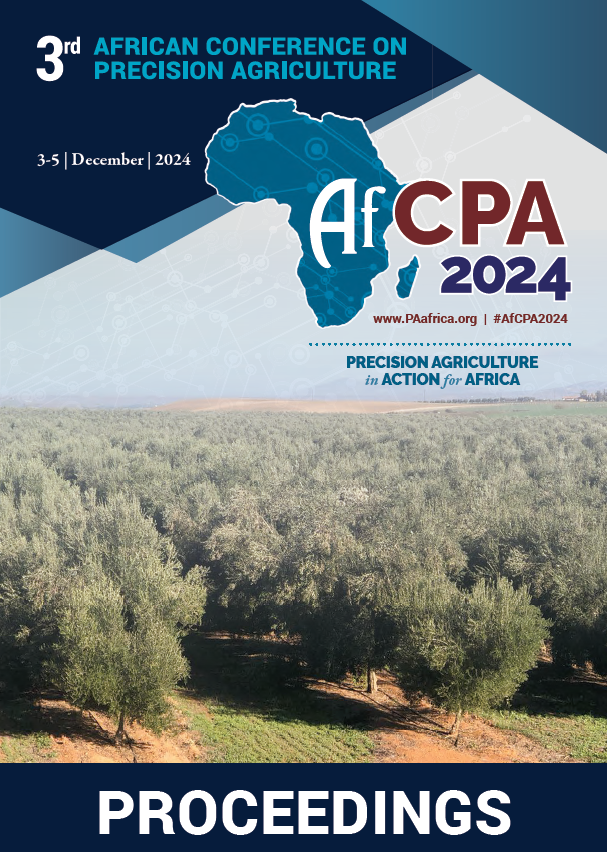
Proceedings
Authors
| Filter results22 paper(s) found. |
|---|
1. Excellence in Agronomy 2030: A new CGIAR-wide initiative to deliver agronomy solutions at scaleRequired increases in crop production and productivity in sub-Saharan Africa (SSA) will not happen without the increased use of appropriate agronomic practices. While several thousand new varieties of nearly all key crops have been produced in the past decade, recent increases in yields in specific countries have only happened when such varieties received the right agro-inputs and management. That said, agronomy is often highlighted as an area that has not delivered impact at scale in SSA, or... B. Vanlauwe, T. Amede, F. Baudron, P. Chivenge, M. Devare, K. Saito, J. Kihara, V. Nangia, P. Pypers, K. Shepherd, E. Vandamme |
2. Mapping spatial variability of soil nutrient deficiencies in smallholder villages – a prerequisite for improved crop production in AfricaSmallholder farming is the dominating type of agricultural production in many parts of Africa. If cultivation practices can be adapted to match the specific needs of individual smallholder plots, this can certainly be regarded as a form of precision agriculture (PA), considering their limited size. A fundamental prerequisite for successful application of PA is the availability of basic information on soil properties at a detailed enough level. To fill yield gaps, site specific information must... M. Söderström, K. Piikki, J. Kihara, J. Mutua, J. Wetterlind |
3. SmartAfriHub for SmartAgriculture capacity buidling in AfricaDigital Innovation Hubs (DIH) are multi-actor ecosystems that support farming communities in their digital transformation by providing a broad variety of services from a one-stop shop. DIHs purpose is to provide a social space for community of practices; provide access to digital technologies and competencies; provide access to infrastructure and tests digital innovations (“test before invest”); provide development playground... K. Charvat, C. Miderho , A. Obot, T. Löytty, H. Kubickova |
4. Spatial variability and mapping of selected soil quality indicators for precision farming at a smallholding level in Minna, NigeriaSmallholding farmers in Nigeria still practice blanket application of fertilizers, without giving consideration to spatial variations in soil properties across their fields. Understanding of spatial variability in soil properties is essential for precision farming, especially in this era of resource scarcity and high cost of fertilizers. This study was carried out to assess and map the spatial variability in selected soil quality indicators in a smallholder farm in Minna, North-central Nigeria,... B. Lawal, M.K. Adeboye, P.A. Tsado |
5. Tomato yield and economic performance under organic and mineral fertilizer applications in coastal TogoResearch efforts towards enhancing vegetables production are still needed in Togo. We assessed tomato (Solanum lycopersicum) yield and associated economic returns under three soil fertility management strategies in a 3-yr period study. Three tomato varieties were used including: MONGAL-F1 (V1), SUMO-F1 (V2) and COBRA 26-F1 (V3). The fertilization regimes were: no fertilizer application as the control (F1), application of 200 kg of N15P15K15 + 100... J.M. Sogbedji, M. Lare |
6. CropSAT – opportunities for applications in precision agriculture in AfricaThe present paper aims at describing the CropSAT system, a Sentinel-2-based interactive decision support system (DSS) that provides vegetation index (VI) maps free-of-charge all across the globe for different applications in precision agriculture. We summarize research results from the ongoing developmental process and pointing to opportunities for development and application in precision agriculture in Africa. The DSS was initially developed in a research project at the Swedish University of... O. Alshihabi, I. Nouiri, M. Mechri, H. Angar, K. Piikki, J. Martinsson, M. Söderström |
7. MAPPING AND ASSESSING AFRICAN SOILS FERTILITY USING HIGH-RESOLUTION REMOTE SENSING AND MACHINE LEARNING APPROACHES: STATE-OF-THE-ART AND PERSPECTIVESAfrica is far from exploiting its true agricultural potential. United Nations Food and Agriculture Organization (FAO) indicates that the continent has 60% of non-cultivated lands worldwide. While soil fertility is well highlighted as one of the major limiting factors, only limited information is available on soil nutrient contents and nutrient availability in the African soils. Soil fertility of agricultural fields is related to many physical and chemical properties, such as texture, organic matter... M. Hmimou, A. Laamrani, F. Sehbaoui, A. Chehbouni, S. Khabba, D. Dhiba |
8. Nutrient management tailored to smallholder agriculture enhances productivity and sustainabilityPlant nutrition plays a central role in the global challenge to produce sufficient and nutritious food, lessen rural poverty, and reduce the environmental footprint of crop production. Efficient fertilizer use requires tailored solutions that are scientifically sound, practical and scalable especially for smallholder farmers, such as the crop-led site-specific nutrient management (SSNM) approach developed in the 1990s for cereal production systems in Asia to address variability among farms. Originating... P. Chivenge, K. Saito, M. Bunquin, S. Sharma, A. Dobermann |
9. QUANTIFICATION OF OPTIMAL FERTILIZERS DEMAND IN WHEAT AND CORN FIELDS IN MOROCCO USING VERY HIGH-RESOLUTION REMOTE SENSED IMAGERY AND HYBRID COMPUTATIONAL APPROACHESAbstract. Demand on agricultural products is increasing as population continues to grow. Data driven management of macronutrients (i.e., nitrogen (N), phosphorus (P) and potassium (K)) and crops are of critical prominence to get the most out of soil in terms of crop yield while preserving environment. This study aims to establish a quantitative framework for macronutrient (i.e., nitrogen, phosphorus, and potassium) status (i.e., excess, deficiency) for winter wheat (Triticum aestivum... K. Misbah, A. Laamrani, A. Chehbouni , D. Dhiba , J. Ezzahar, K. Khechba |
10. Small Machinery for Sustainable Intensification of Crop-Livestock System under Biomass ShortageSmall crop-livestock systems in Low- and Middle-Income Countries (LMIC) such as North African ones are characterized by low mechanization levels, thus undermining their productivity and sustainability. Machinery being promoted in local markets are made and imported mostly from industrial countries where farm systems are larger in terms of size. Prices of these machines are not affordable for small to medium sized land-holding farmers who remain incapable of upgrading and modernizing their farming... U. Rudiger, Z. Aidoudi, A. Frija, M. Rekik, A. Zaiem, H. Cheikh |
11. Mapping of micronutrients status in soils under multivarietal Citrus sinensis production for precision agricultureCitrus production in Nigeria is below the world average; and this is caused among other things by poor soil management. The situation is further acerbated by blanket fertilizer application and low application of precision in soil fertility management. A study was carried out on a 34 year old multi varietal citrus orchard under sweet orange (Citrus sinensis) to determine the current soil fertility status and variability of micronutrients. Soil samples were collected at a sampling depth... B.N. Okafor, B.N. Okafor, V. Aduaramigba, O. Denton |
12. Mapping African soils at 30m resolution - iSDAsoil - Western Time Zones“iSDAsoil” combines remote sensing data and other geospatial information with carefully stratified point samples subjected to spectral analysis and traditional wet chemistry reference analysis. State of the art machine learning techniques were used to create digital maps of 17 agronomically important soil properties at 3 depths, including estimates of uncertainty. iSDAsoil is designed to encourage sharing and we hope that the owners of other soil and agronomic data, in industry... J. Crouch, K. Shephard, M. Miller, J. Collinson, P. Singh, P. Pypers, R. Van den bosch, C. Van beek, M. Chernet, S. Aston |
13. Mapping African soils at 30m resolution - iSDAsoil - Eastern Time Zones“iSDAsoil” combines remote sensing data and other geospatial information with carefully stratified point samples subjected to spectral analysis and traditional wet chemistry reference analysis. State of the art machine learning techniques were used to create digital maps of 17 agronomically important soil properties at 3 depths, including estimates of uncertainty. iSDAsoil is designed to encourage sharing and we hope that the owners of other soil and agronomic data, in industry... C. Van beek, M. Chernet, S. Aston, M. Miller, J. Collinson, K. Shephard, J. Crouch, T. Terhoeven-urselmans |
14. Fighting Food, Fertilizer, and the Climate Crisis in Africa Through Targeted Nitrogen ManagementFood insecurity is a major challenge in Africa which is likely to worsen in the future unless food production in the region is substantially increased to keep up with the food demand of the increasing population. A sufficient amount of nitrogen (N) fertilizer is required for increasing crop yield as N helps convert solar radiation into carbohydrates that drive plant growth. However, smallholder producers in Africa use a small quantity of fertilizer N not sufficient for plant needs resulting... T. Sapkota, N. Cheerakkollil konath, R. Takele, S. Snapp |
15. Leaf-proximal Hyperspectral Data and Multivariate Modelling Approaches to Estimate Phosphorus and Potassium Content of Wheat LeavesThe assessment of plant nutrient status to provide sufficient fertilization for rapid and continuous uptake by plants has been based on visual diagnosis in the field, which is quick but demands a lot of experience and has low operability. Visible near-infrared spectroscopy (VNIS) has shown to be a quick, non-destructive, accurate, and cost-effective analytical method in precision agriculture. In this study, we assessed the potential of this technology to predict phosphorus and potassium content... Y. El-mejjaouy, B. Dumont, P. Vermeulen, A. Oukarroum, B. Mercatoris |
16. From Drone to Satellite – Does It Work?Multispectral drone-sensors are useful for detailed studies of crop characteristics in field trials, e.g. to create prediction models on nitrogen (N) uptake, or even estimates of optimal N rate to apply. To enable wide application of such models, they may be applied in satellite image-based decision support systems for farmers. However, successful transfer of models based on spectral data from one platform to another, requires strong and stable correlation between data from the different sensors.... M. Söderström, K. Persson |
17. Use of Earth Observation Imagery, Advanced Modelling Algorithms and Other Monitoring Systems to Produce Operational Agricultural Annual Crop Inventories for Morocco.African farmers are facing the challenges of a changing climate, increased temperatures, changes in rainfall patterns, more frequent extreme weather events and reductions in water availability. The digital transformation of the agricultural sector is one of the opportunities that can promote good practices of the African agricultural through the sharing of information and tools for decision-making, thereby, boost economic growth of our African country. The shift to digital technologies is... M. Choukri, A. Laamrani , V. simonneaux , B. Gerard , S. Belaqziz, A. Chehbouni, K. Misbah, H. Mcnairn |
18. The Global Crop Nutrient Removal Database (Gcnrd): Development, Initial Analysis and Identification of Current Data GapsImproved understanding of the factors affecting nutrient uptake can enable production optimization, increased nutrient use efficiencies, reduced environmental footprints, and overall higher economic returns for farmers. Crop uptake is affected by genetics, soil, weather, agronomic practices, and their interactions. As such, understanding the way crop nutrient uptake varies across different regions and production environments requires the coverage of various parameters, and necessitates collaboration... C. Ludemann, A. Dobermann, N. Graff, S. Sela, M. Van loon, R. Hijbeek, M. Van ittersum |
19. Detecting the Impact of Hail Damage on Maize Crops in Smallholder Farms Using Unmanned Aerial Vehicles Derived Multispectral DataNatural disasters such as hailstorms are now frequent and negatively impact smallholder farmers' livelihoods. In these events, there is a need for robust and innovative techniques for monitoring the extent of their damage in smallholder croplands to optimise production. In this regard, this study sought to evaluate the utility of drone-derived multispectral data in estimating crop health elements (i.e., equivalent water thickness (EWT), chlorophyll content, and leaf area index (LAI) of maize... M. Sibanda |
20. Capacity Building of African Young Scientists in Precision Agriculture Through Cross Regional Academic MobilityClimate change is one of the main problems affecting food and nutrition globally, particularly in sub-Saharan Africa. Adapting to and/or mitigating climate change in the agri-food sector requires merging information technologies, genetic innovations, and sustainable farming practices to empower the agricultural youth sector to create effective and locally adapted solutions. Precision Agriculture applied to crops (PAAC), has been advocated as a strategic solution to mitigate/adapt agriculture at... K. Frimpong, V. Fassinou hotegni, A. Karangwa, A. Manyatsi, M. Amri, D. Cammarano, C. Lesueur, J. Taylor, S. Phillips, E.G. Achigan-dako, G. Houessou, O. Linkpon, D. Tchokponhoué, C. Houdegbe, C. Adje |
21. Predicting the Distribution of Groundnut Phytopathogens Under Current and Future Climatic Scenarios in ZimbabweGroundnut (Arachis hypogaea L.) is an important oil crop with immense nutritional and economic benefits, but its productivity in sub-Saharan Africa (SSA) is threatened by a plethora of phytopathogens such as groundnut rosette virus, Alternaria leafspots, early leafspots and peanut rust. In Zimbabwe, ecological niches and epidemiology of these pathogenic microbial strains, particularly under the current and predicted climate change scenarios, are still poorly understood. Yet, this information... H. Chinwa, C.N. Kamutando |
22. Use of Digital Extension Tools for Agricultural Information Management Among Cassava Value Chain Actors in Ibadan Metropolis, Oyo State, NigeriaPoor coverage of farmers by extension services and other limitations necessitates adapting the agricultural process to new opportunities, including digital extension. This is more important for cassava value chain actors given the recognition of the crop for food security in Nigeria and its widespread promotion by several local and regional development interventions. Therefore, the use of digital extension tools for agricultural information management among cassava value chain actors in... O. Fadairo, A.M. Durojaiye, R. Adegbayi |
